
Maintaining a consistently tidy living space refers to a set of organized habits and systems that keep household areas clean, orderly, and functional on an ongoing basis. The concept covers recurring cleaning tasks, simplified organization methods, and small maintenance routines that prevent clutter and surface buildup from accumulating. It typically emphasizes manageable time investments and predictable patterns so that the overall home environment remains usable and safe without requiring infrequent, intensive cleaning sessions.
The approach usually combines scheduling, storage design, and habits that match a household’s needs and rhythms. It may involve breaking tasks into daily, weekly, and monthly activities, assigning zones or rooms for focused attention, and integrating decluttering decisions into routine maintenance. Tools, surface-appropriate cleaners, and storage formats often play a supporting role in making these practices repeatable and less time-consuming.

Comparative frameworks for maintaining tidiness often balance frequency and depth. For example, a daily quick routine may reduce the time needed for weekly tasks, while a monthly deep-clean session may address maintenance such as filter changes or grout care. Households typically adapt these frameworks by considering occupancy levels, presence of children or pets, and available time. Decision criteria for task frequency can include visible cleanliness, functional needs, and seasonal changes rather than fixed rules.
Scheduling practices may use time blocks, checklists, or digital reminders to encourage consistency. Short, repeatable tasks often lower the psychological barrier to beginning cleaning, and scheduled deeper tasks can be framed as maintenance to prevent future problems. Time estimates may vary widely; many households report spending a small portion of daily time on upkeep and allocating larger blocks weekly or monthly for more intensive work.
Storage and organization strategies typically focus on access and containment. Items used frequently may be stored in easy-to-reach locations, while infrequently used possessions may be consolidated into labeled containers. Visible storage, open shelving, and clear bins can support quick inventory checks but may also require more frequent tidying. The choice of storage format may reflect space constraints, aesthetic preferences, and the household’s tolerance for visible items.
Tool selection and surface care choices can influence how often specific tasks are needed. Using microfiber cloths, appropriate vacuums, and surface-appropriate cleaning products may reduce effort and limit abrasion on finishes. Maintenance practices such as periodic appliance checks, filter replacements, and addressing small repairs promptly can prevent tasks from compounding. These practices often function best when integrated into a predictable schedule that suits household routines.
In summary, the concept centers on repeatable habits, a balance of short and deep tasks, and storage systems that align with daily life. Strategies may vary between households but commonly aim to reduce cumulative workload and preserve functionality. The next sections examine practical components and considerations in more detail.
Routine schedules typically separate tasks by frequency: daily, weekly, and monthly. Daily routines may include quick surface wipes, dish care, and decluttering high-traffic zones; these short actions can often prevent small messes from becoming larger problems. Weekly routines frequently involve vacuuming, bathroom cleaning, and changing bed linens, which may take longer but address hygiene and appearance. Monthly tasks often cover deeper maintenance like appliance lint removal or cabinet checks. Time allocations can vary; many people may find that short daily tasks of 10–20 minutes reduce the need for longer weekly sessions.
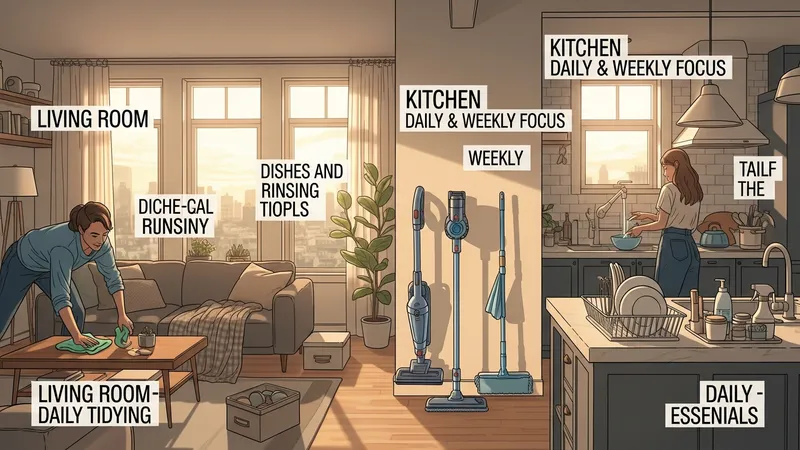
When designing a schedule, households often consider rhythm and occupancy. A two-person household may require different frequencies than a larger family or one with pets, and high-use rooms may need more attention. Schedules can be flexible: a zone on a weekday evening and a larger area on a weekend morning, for example. Using predictable intervals can help ensure maintenance tasks — such as filter checks or grout inspection — are not overlooked, yet these intervals typically remain adjustable to personal circumstances.
Practical considerations include task bundling and energy management. Bundling related tasks (e.g., dusting surfaces followed by vacuuming) can reduce setup time and improve efficiency. Some people may prefer time-boxing, setting a fixed duration for tidying sessions, while others may prefer task lists that are checked off. Both approaches can support consistency; choosing a method that matches daily energy patterns and household routines often makes it easier to sustain over time.
Routine planning may also incorporate seasonal shifts. For instance, mudrooms or entryways might need more attention during wet seasons, and storage rotation for seasonal clothing can be scheduled quarterly. Maintaining a simple log or checklist can help track when deeper tasks were last completed, which may help households plan maintenance before small issues escalate. These planning practices are intended as organizational tools rather than strict prescriptions.
Room-focused approaches often allocate specific tasks and storage solutions per space to match function. For kitchens, the emphasis is typically on food safety, clearing countertops, and regular appliance maintenance. In bathrooms, routine tasks may include surface sanitation and ventilation checks to limit moisture buildup. Bedrooms often prioritize clothing storage and daily bed tidying to preserve a calm environment. Living areas may focus on managing textiles and visible clutter to maintain usability for shared activities.
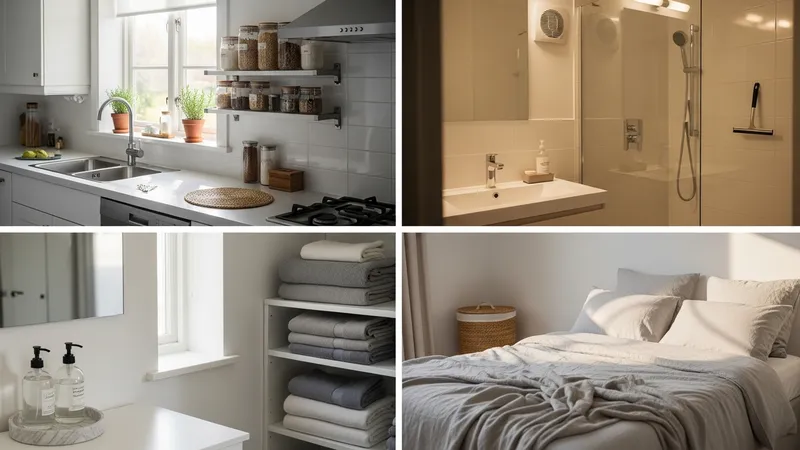
Adapting techniques to each room can make routines more efficient. For example, kitchens may benefit from clearing and wiping surfaces after meal preparation, while bathrooms may use quick squeegees or wipes to reduce soap scum accumulation. Bedrooms can use simple routines like placing laundry in a designated basket each evening. These room-specific adjustments may reduce the frequency of intensive cleaning while keeping functional areas ready for use.
Storage placement is a common room-level consideration. In kitchens, storing frequently used utensils in accessible drawers reduces countertop clutter. In living rooms, consolidating small items into single containers can simplify tidying. In multi-use rooms, flexible storage such as rolling carts or stackable bins may be helpful for switching functions. The suitability of storage formats often depends on available space and how people in the household typically use each room.
Room-by-room plans may also consider safety and maintenance items, such as ensuring vents are unobstructed and that cleaning products are stored securely away from children or pets. Regularly reviewing room routines — perhaps seasonally — can help households adapt storage and cleaning tasks to changing needs, such as shifts in occupancy or lifestyle. These reviews often serve as practical checkpoints rather than one-time overhauls.
Decluttering methods commonly aim to reduce item volume and clarify what should remain in daily circulation. The four-box method (keep, donate/recycle, relocate, discard) offers a structured decision-making process that may reduce indecision. Another approach is frequency-based sorting, where items are categorized by how often they are used; items rarely used can be stored elsewhere. Decluttering sessions are often scheduled periodically, and many households find shorter, focused sessions more sustainable than infrequent large clear-outs.

Storage solutions tend to prioritize access and visibility. Clear bins or labeled containers can simplify finding items and reduce repetitive searching, while vertical storage can help maximize limited floor space. Drawer organizers, shelf risers, and modular shelving are examples of formats that may fit different spatial constraints. The selection of storage often balances cost, space, and the household’s habits — a simpler system may be easier to maintain than a complex one.
Rotation and consolidation are additional considerations. Seasonal rotation of clothing and consolidation of duplicates can reduce clutter and make storage more efficient. For households with limited space, multi-functional furniture (e.g., benches with internal storage) may increase usable storage without expanding footprint. These choices often reflect lifestyle needs, so assessing what is used daily versus occasionally can guide storage design.
Maintaining decluttered spaces typically benefits from small ongoing commitments, such as a periodic 15–30 minute review of a storage area. Clear criteria for disposal or donation — such as a one-year unused rule — may help decision-making but should be applied flexibly. The overall aim is to keep possessions aligned with practical use and living patterns rather than accumulating items without a clear purpose.
Selecting appropriate tools and surface care methods can reduce effort and protect finishes. Microfiber cloths may trap dust and require less liquid cleaner for many surfaces, while vacuum attachments can target crevices and upholstery. For surfaces sensitive to abrasion or solvents, spot testing and manufacturer guidance may be useful. Regular maintenance, such as emptying vacuum canisters or cleaning mop heads, often improves tool performance and can extend useful life.
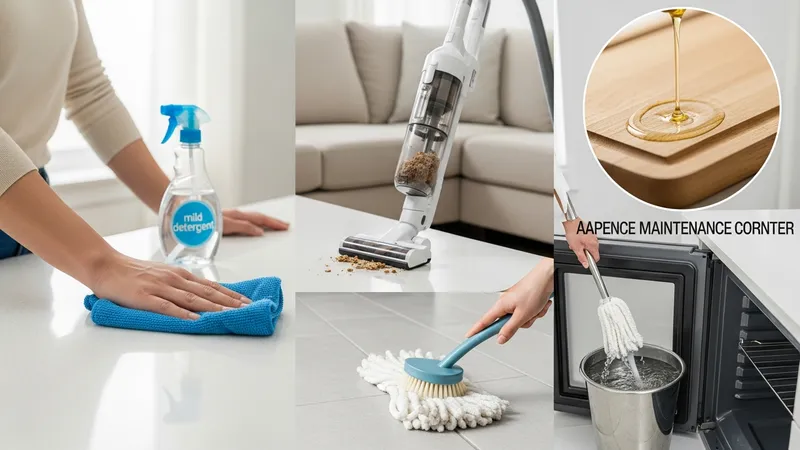
Surface care choices often depend on material: sealed countertops typically tolerate mild detergents, while unsealed wood surfaces may need oils or specific cleaners to avoid damage. Tile and grout may benefit from periodic grout sealing or gentle scrubbing to limit buildup. Appliance maintenance, such as checking seals and cleaning filters, may improve efficiency and reduce the need for repairs. These practices are preventive in nature and may reduce cumulative cleaning effort.
Safety and ventilation are relevant when using cleaning products. Many households may prefer milder, multi-purpose cleaners for routine use and reserve stronger products for targeted tasks, while ensuring adequate airflow during application. Proper storage of chemicals, clear labeling, and keeping products out of reach of children and pets are common safety considerations. When in doubt, consulting manufacturer instructions for appliances and surfaces may guide suitable care techniques.
Longer-term maintenance may include scheduled checks for small repairs, such as loose grout, worn seals, or leaking fixtures, which can prevent larger cleaning needs later. Tracking these maintenance items on a simple schedule may help households address issues while they remain manageable. These maintenance practices, combined with routine cleaning and organized storage, typically support a consistently tidy and functional living environment.