
Businesses protect their digital records and operational systems through coordinated activities that span technical controls, policies, and personnel practices. This protective approach covers who can access information, how networks and endpoints are defended, how data is stored and transmitted, and how organizations prepare for and respond to security incidents. The aim is to reduce the likelihood of unauthorized access, limit the impact of breaches, and preserve the confidentiality, integrity, and availability of business information without implying absolute prevention.
Protection strategies typically combine preventive, detective, and corrective measures. Preventive measures may include restricting access and hardening systems; detective measures often involve logging and monitoring; corrective measures address recovery and remediation after an event. Implementation choices depend on factors such as data sensitivity, regulatory obligations, business size, and available resources. Emphasis is often placed on layering controls so that a failure in one area does not immediately expose critical assets.
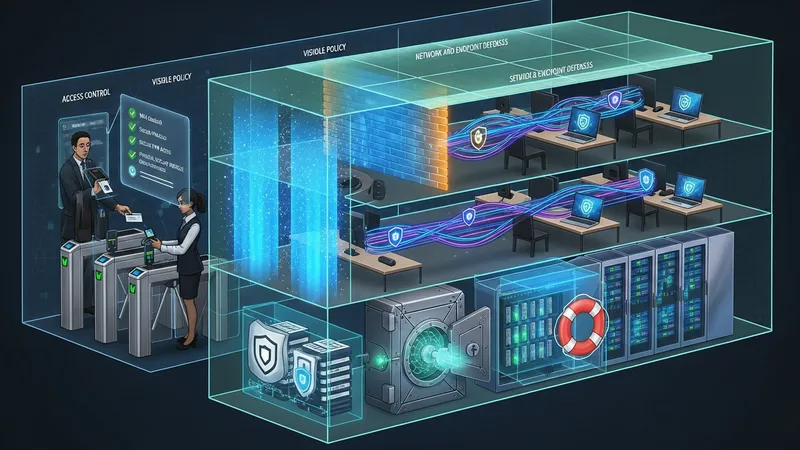
Access control and identity management often form the first line of defense. Role-based access control (RBAC) or attribute-based approaches may be applied to ensure accounts only permit the minimum necessary privileges. Centralized identity systems can simplify administration and support MFA, single sign-on, and audit trails. Organizations frequently balance granularity of access with administrative overhead, recognizing that overly permissive accounts increase exposure while overly restrictive settings can impede operations and lead to risky workarounds.
Network-level protections can be layered from perimeter firewalls to internal segmentation and zero trust concepts that do not assume safe internal networks. Firewalls, virtual private networks, and intrusion detection systems can reduce broad network exposure, while segmentation isolates sensitive systems to limit lateral movement. Monitoring network flows and applying anomaly detection can help detect unusual patterns. These network measures often complement endpoint controls and may be tuned to reflect typical traffic patterns to reduce false positives.
Data resilience strategies are commonly paired with encryption. Regular backups, integrity checks, and secure offsite or immutable storage may reduce business disruption after an incident. Backup frequency and retention typically reflect recovery time and recovery point objectives set by the organization. Backup systems should themselves be protected against compromise and accidental deletion, and routine testing of backups can reveal gaps in recovery procedures rather than relying solely on theory.
Employee awareness and governance help connect technical controls to everyday behavior. Training programs that explain phishing recognition, device handling, and reporting channels can decrease human-driven risks. Governance structures such as defined policies, incident response playbooks, and periodic risk assessments typically help align security activity with business priorities. Governance also often clarifies responsibilities for data classification, vendor oversight, and change management to ensure consistent application of controls.
In summary, the approach described combines access management, network and endpoint safeguards, cryptographic protection, backup practices, and personnel measures as components of a broader security posture. Each component may contribute to reducing specific risk types and often requires ongoing evaluation and adjustment as threats and business needs evolve. The next sections examine practical components and considerations in more detail.
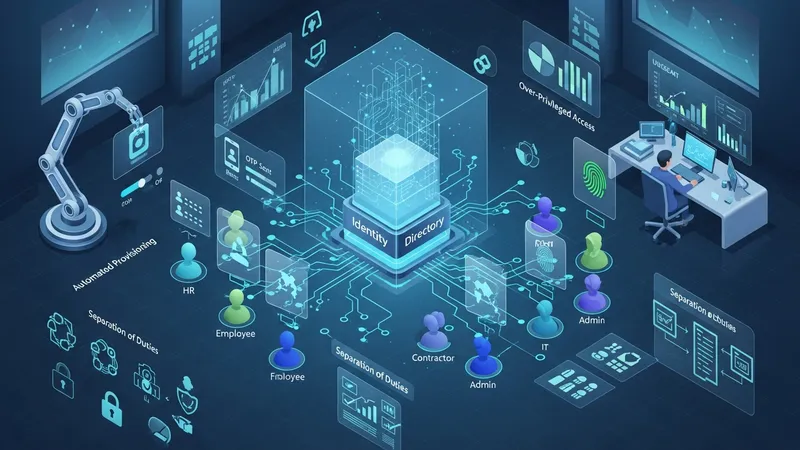
Identity and access controls determine which users, services, or devices may interact with business data and systems. Common mechanisms include account lifecycle management, centralized directories, and multi-factor verification methods that add layers beyond passwords. Organizations may adopt role-based or attribute-based models to align privileges with job responsibilities. Regular review of accounts and privileges often helps identify stale or over-privileged access that could be misused. Considerations typically include balancing security with usability, ensuring administrative processes are auditable, and integrating identity systems with logging and monitoring for traceability.
When planning access control, integration with third-party services and cloud platforms often influences design choices. Federated identity and single sign-on can reduce password proliferation while centralizing authentication policies. Technical controls may be complemented by policy controls, such as mandatory account reviews or separation of duties. Implementers may consider automated provisioning and deprovisioning to reduce manual errors. These design decisions may affect operational complexity and should be evaluated against expected administrative capacity and compliance requirements.
Privileged access requires particular attention because accounts with elevated rights can cause widespread impact if compromised. Techniques to manage privileged accounts include session isolation, just-in-time privilege elevation, and dedicated logging for administrative actions. Organizations may also use multi-factor verification for privilege use and restrict administrative access to controlled devices or networks. Considerations often include whether to centralize privilege management and how to ensure that emergency or break-glass procedures are auditable and time-limited.
Periodic access reviews and identity-related audits typically help maintain a consistent access posture. These reviews commonly focus on inactive accounts, unusual privilege combinations, and vendor or contractor access. Automated tools can assist in detecting discrepancies, but human oversight often remains necessary for context-sensitive decisions. The design of review cycles and escalation paths typically reflects organizational risk tolerance and regulatory obligations and may be adjusted as business processes change.

Network defenses and endpoint protections work together to limit opportunities for unauthorized access and intrusion. Network controls include perimeter defenses, segmentation, secure remote access, and traffic monitoring, while endpoint defenses involve anti-malware, application allowlisting, and host-based intrusion detection. Many organizations deploy layered detection capabilities so that if one control fails, others may detect or mitigate malicious activity. Design choices often consider typical traffic patterns and business application requirements to reduce operational friction while maintaining protective coverage.
Endpoint detection and response (EDR) solutions often provide telemetry and automated checks that can surface suspicious behaviors, such as unusual process execution or unauthorized use of administrative utilities. These tools may support containment actions and provide forensic data for investigations. Because EDR agents run on many devices, planners often assess performance impact, update mechanisms, and compatibility with legacy systems. Policies for patching and configuration management typically ensure endpoints remain on supported and hardened settings to reduce exploitable vulnerabilities.
Segmentation and micro-segmentation may be used to limit lateral movement in the event of a compromise. Logical separation of environments—for example separating development from production—can reduce the blast radius of incidents. Secure remote access approaches, such as tunneled connections and device posture checks, typically help ensure that remote clients meet minimum security criteria before accessing sensitive systems. These network practices often require coordination with operations and application owners to maintain necessary workflows while enforcing controls.
Monitoring and logging across network and endpoint layers usually support detection and response activities. Centralized logging platforms that aggregate events can enable correlation across sources and support incident investigation. Retention policies for logs and telemetry frequently reflect both operational needs and any applicable regulatory requirements. Considerations may include storage cost, privacy concerns related to collected data, and the maturity of analysts or automation available to review aggregated signals.
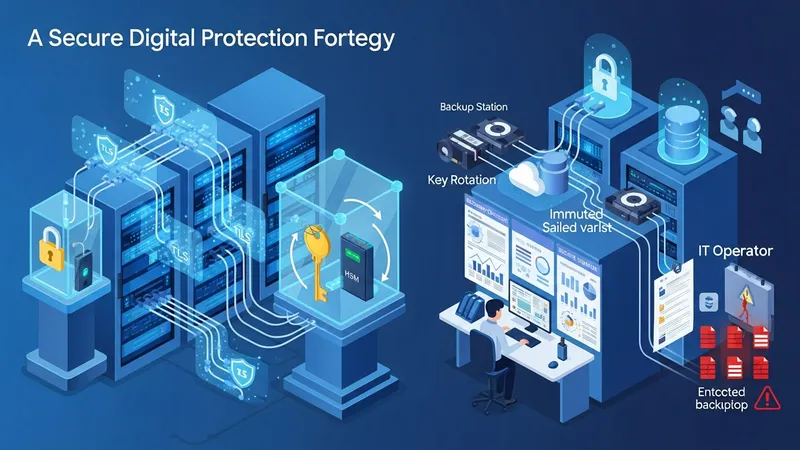
Cryptographic controls are commonly used to protect data confidentiality during transmission and while at rest. Transport Layer Security (TLS) is often used for data in transit, while disk or file-level encryption protects stored data. Key management practices—such as separation of keys from encrypted data, controlled access to key material, and periodic rotation—typically influence the effectiveness of encryption. Organizations may weigh the complexity of key lifecycle management against the sensitivity of the data to determine appropriate cryptographic adoption.
Backup strategies commonly reflect recovery time and recovery point objectives set by the business. Frequent backups and tested recovery procedures can reduce downtime when incidents occur, although they do not remove the need for other controls to prevent initial compromise. Backup integrity checks and isolation mechanisms—such as immutability or offsite copies—may reduce the risk that backups become corrupted or encrypted by attackers. Decisions about retention durations and restore priorities typically reflect legal, contractual, or operational needs.
Storage architectures can influence protection approaches. Centralized storage systems may simplify access controls and monitoring, while distributed storage models can require more granular controls across locations. Cloud-based storage services typically offer built-in encryption and access controls that can be leveraged, but the responsibility model varies and often requires configuring controls correctly. Considerations include evaluating default settings, ensuring encryption keys are managed according to policy, and verifying that backups are not inadvertently exposed through misconfiguration.
Data classification frameworks can help determine which datasets require stronger controls or more frequent backups. Classifying data by sensitivity often guides encryption, retention, and access rules. Implementing a simple classification scheme may make it easier to apply consistent protections without excessive overhead. Periodic reviews of classification assignments and related controls typically help ensure that protections remain aligned with evolving business priorities and that storage and backup practices remain effective.

Risk assessment processes commonly identify and prioritize threats, vulnerabilities, and potential impacts to business data. Organizations often map assets, identify likely attack paths, and evaluate controls in place to estimate residual risk. These assessments may feed into decision-making about investments in controls and help set realistic objectives for recovery. Risk assessments are typically periodic and updated when significant changes occur, such as new systems, regulatory changes, or shifts in vendor relationships.
Incident response planning provides a structured way to detect, contain, analyze, and recover from security events. Response plans often define roles, communication pathways, and escalation criteria, and include playbooks for common scenarios such as data exfiltration or ransomware. Regular exercises and tabletop simulations may help test assumptions and reveal gaps in coordination. Documentation from incident handling frequently supports post-incident reviews and adjustments to controls to reduce the chance of recurrence.
Employee awareness initiatives typically focus on topics that present frequent risk, such as recognizing phishing attempts, handling sensitive data, and reporting suspected incidents. Training may be tailored to role-specific tasks and coupled with simulated exercises to reinforce learning. Organizations often track training completion and assess comprehension, while balancing training frequency to avoid fatigue. Awareness alone is not sufficient, but it can reduce the likelihood of common human-driven errors when combined with technical controls and clear reporting channels.
Vendor and third-party risk management is another consideration because service providers may have access to systems or data. Due diligence processes, contractual security clauses, and periodic assessments of provider controls commonly help organizations understand and mitigate supply chain risks. Continuity planning and contractual terms for incident notification may support timely coordination during events. Together, risk management, incident response planning, and staff awareness form a cycle of preparation, detection, and improvement that supports the protection of business data.